| Horvat Midras |
| Horvat Midras |
| Rehabilitation of a burial cave |
| Orderer | The Nature and Parks Authority |
| Duration | August 2007 |
| Implemented by: |
Tsagai Asma'in
Conservation Guidance - Yoram Saad, Head of the Implementation Branch
|
Horvat Midras is located in the Adulam Nature Reserve, in the heart of the Judean Shephelah, c. 6 kilometers north of the settlement Bet Guvrin.
The ancient settlement and the cemeteries adjacent to the west, south and east of it extend across an area of 250 dunams in which there are scores of caves, underground cisterns and extensive building remains on the surface level. The ruin was founded in the Hellenistic period (second century BCE) and the artifacts at the site are indicative of an active settlement that existed throughout the Roman, Second Temple and Byzantine periods.
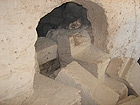
In the summer of 1976 an archaeological excavation was conducted in one of the burial caves at the site, under the direction of Amos Kloner of the Department of Antiquities. The cave, which had been breeched and plundered by antiquities robbers, was dated to the end of the first century-beginning of the second century CE, based on the pottery sherds that were recovered from inside it.
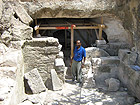
The aim of the current project is to return the cave to its previous condition prior to the destruction and vandalism and prepare it for visits by the public. The work is being carried out with the aid of three laborers from a man-power company.
-----------------------------------------------------------------
For additional information (in Hebrew) see:
http://edu-negev.gov.il/shelach/docs/midras.doc
To view the figures, click on the figure caption
|
|